

Sell Your Used BlueCrest Pulse Inserter
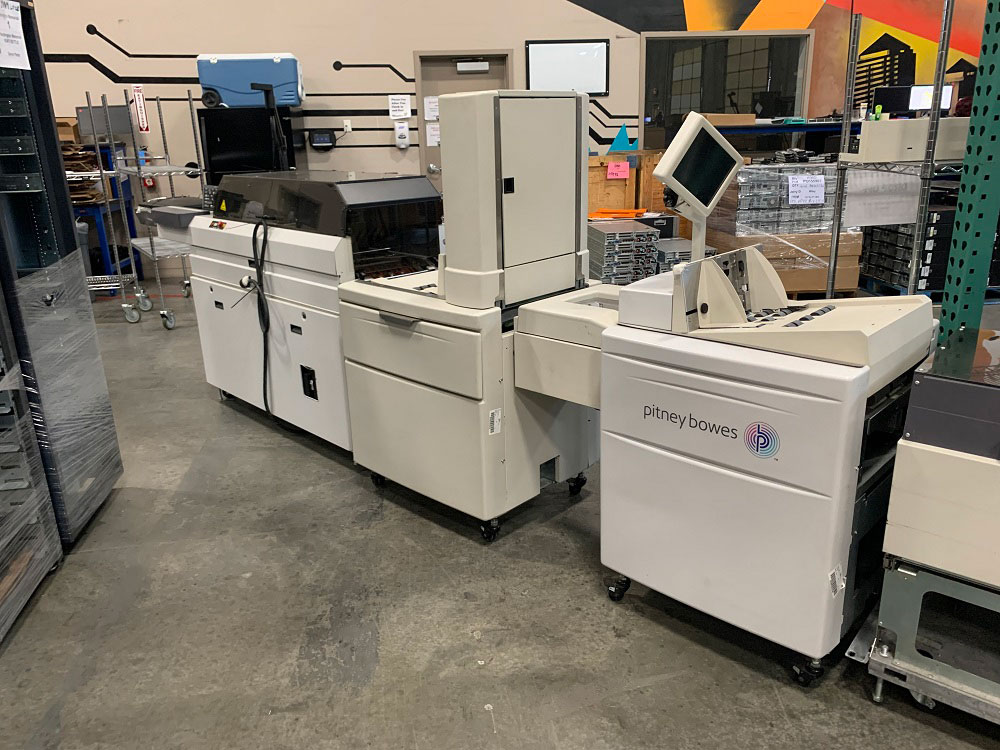
Looking to sell a BlueCrest Pulse inserter? ZAR Corp buys used Pulse production mailing systems from transactional printers, service bureaus, healthcare and financial mail operations, commercial mailers, in-plant facilities, and other organizations processing frequent short-run jobs.
The Pulse was designed specifically for operations that need to move quickly between many smaller jobs while maintaining production-mail integrity. Its compact multi-format platform combines automated setup with cut-sheet input, feeder capacity, scanning, folding, and manual-feed capabilities.
Whether your Pulse is still in daily production, being replaced by newer equipment, or sitting idle after a workflow change, send ZAR the details.
Request an offer for your BlueCrest Pulse today.
BlueCrest Pulse Models and Names We Buy
Depending on the age and branding of your equipment, your system may be identified as:
BlueCrest Pulse
BlueCrest Pulse Inserter
BlueCrest Pulse Inserting System
Pitney Bowes Pulse
Pitney Bowes / BlueCrest Pulse
Pulse Production Inserter
Pulse Transactional Mail Inserter
Pulse 6-Station Inserter
Systems from the transition between Pitney Bowes and BlueCrest may carry either manufacturer’s branding.
If you’re unsure exactly which system you have, send ZAR a photograph of the machine and its serial/data plate.
Pulse Configurations ZAR Is Looking For
ZAR is interested in complete Pulse systems as well as machines equipped with upgraded input, feeding, integrity, and output options.
Tell us if your Pulse includes:
6-station feeder configuration
Standard insert feeders
High-capacity feeders
Booklet feeder
High-capacity cut-sheet feeder
Variable-page cut-sheet input
Hand-feed station
Accumulator
Automated folder
Letter and flats capability
1D or 2D barcode scanning
Cognex or other camera systems
File-based processing
Mailpiece integrity scanning
Metering equipment
Envelope printing
Output conveyor
Shingling conveyor
Updated computer or controller
Workflow or production-management software
The Pulse platform supports up to six standard feeders plus a booklet feeder and can process inserts ranging from single sheets to heavier booklets. ZAR’s own sold Pulse inventory includes six-station configurations equipped with 2D scanning.
Don’t see your exact configuration listed? Send it anyway. Optional modules and accessories can significantly affect the value and resale application of a Pulse system.
What Makes the Pulse Different?
Pulse occupies a different role from BlueCrest’s larger high-speed transactional platforms.
BlueCrest developed Pulse for short-run and manual transactional-mail work, where reducing setup time between jobs can be as important as maximum hourly throughput. Its combination of automated setup and a hand-feed station allows an operation to move work that might otherwise require separate manual and automated processes onto one platform.
BlueCrest’s Pulse materials highlight the ability to handle average job sizes as low as approximately 30 pieces within a run and perform 100 or more changeovers per day in suitable workflows. The system can also accumulate sets up to approximately one-half inch thick.
Those capabilities make configuration, automation, and condition especially important when evaluating a used Pulse.
What Affects the Value of a Used BlueCrest Pulse?
The resale value of a Pulse depends on much more than its year.
Year and equipment generation
Identify the year of manufacture and whether the machine carries Pitney Bowes or BlueCrest branding.
Later controls, software, scanning equipment, and upgrades should be documented separately.
Cycle count and usage
Provide the machine’s current cycle count if available.
A Pulse used primarily for short-run or overflow work may have a very different production history from a machine that has operated continuously in a busy transactional-mail environment.
Number and type of feeders
Feeder configuration is important.
Tell ZAR how many standard feeders are installed and whether the system includes:
High-capacity bins
Specialized insert feeders
A booklet feeder
Additional feeding equipment
Cut-sheet input
The Pulse was designed with high-capacity cut-sheet processing as a key application.
Identify the installed sheet feeder and whether the system has been used for variable-page transactional jobs.
Scanning and integrity technology
Camera and barcode systems can materially affect the usefulness of a Pulse for transactional applications.
Document any:
1D barcode readers
2D barcode cameras
Cognex equipment
File-based matching
Input scanning
Output scanning
Mailpiece verification
Document-to-envelope integrity technology
File-based processing
BlueCrest offered optional file-based processing for Pulse to improve accuracy and support automated document-production workflows.
If your system has file-based capabilities, include details about its software, computers, licenses, and associated scanning hardware.
Folding and accumulation
Pulse can handle multiple folding requirements and relatively thick document sets.
ZAR’s documented Pulse specifications include C-fold, Z-fold, half-fold, and no-fold applications, with inserted sets up to approximately 0.5 inch thick.
Identify the accumulator and folder configuration installed on your machine.
Letter and flats capability
Pulse accommodates a broad envelope range. ZAR’s prior Pulse listings document envelope sizes from approximately 4 × 8 7/8 inches through 13 7/8 × 13 7/8 inches.
If your machine was commonly used for flats or larger-format applications, include that information.
Current mechanical condition
Tell ZAR whether the Pulse is:
Currently running production
Recently serviced
Under maintenance
Experiencing intermittent faults
In need of repair
Disconnected or in storage
Recent maintenance records and information about replaced belts, rollers, sensors, or other wear components can also help with evaluation.
ZAR Has Bought and Sold BlueCrest Pulse Inserters
ZAR has direct experience marketing and selling Pulse equipment.
ZAR’s documented equipment history includes two 2017 six-station BlueCrest / Pitney Bowes Pulse inserters. Those systems included six feeder stations, a 2D camera, and an envelope insertion-area conveyor. Both systems were sold.
ZAR has also sold another Pitney Bowes / BlueCrest Pulse system documented with:
Up to six standard feeders
One booklet feeder
Letter and flats capability
Up to 0.5-inch insert thickness
C-, Z-, half- and no-fold applications
Up to 30,000 sheets per hour
Up to 4,000 inserting cycles per hour
That hands-on equipment history gives ZAR a useful basis for identifying Pulse configurations and evaluating the components included with a used system.
Short-Run and Transactional Pulse Systems
If your Pulse was purchased specifically to handle small transactional jobs, rework, exception mail, or overflow from larger production inserters, mention that when requesting a valuation.
BlueCrest positioned the Pulse as a way to automate manual work areas and move smaller jobs off high-production inserters. The system combines automated job setup with manual-feed capability, helping one workcell accommodate jobs that otherwise might require multiple processes.
Useful information to provide includes:
Typical job size
Approximate jobs or changeovers per day
Primary application type
Whether variable-page documents were processed
Whether the machine handled reprints or exception mail
Whether file-based processing was used
Whether manual-feed applications were common
That operating history can help ZAR understand how the machine was used and which resale applications it may suit.
We Buy Pulse Accessories and Support Equipment
Don’t overlook equipment installed around the main inserter.
ZAR may also be interested in:
Standard feeder modules
High-capacity feeder bins
Booklet feeders
High-capacity sheet feeders
Hand-feed stations
Accumulators
Folder modules
1D and 2D scanners
Cognex cameras
Integrity equipment
Control computers
File-processing hardware
Metering equipment
Envelope printers
Output conveyors
Shingling conveyors
Spare modules
Replacement parts
If an entire Pulse workcell is being removed, send ZAR the complete equipment list before separating components.
Running, Idle or In Need of Repair?
Your Pulse does not have to be freshly refurbished before ZAR will evaluate it.
We are interested in systems that are:
Currently in production
Operational but scheduled for replacement
Used primarily for overflow or short-run work
Recently removed from service
Idle
Disconnected
In storage
In need of service or repair
Missing selected components
Part of a mailroom consolidation
Part of a complete facility liquidation
Condition affects value, but feeders, cameras, sheet-input equipment, controllers, and other Pulse components may still have resale value even if the entire system requires work.
Contact ZAR before dismantling or disposing of the machine.
Contact ZAR
Sell Your BlueCrest Pulse to ZAR Corp
Whether you’re upgrading your short-run workflow, replacing a Pulse with newer equipment, consolidating mail production, or removing an idle machine, contact ZAR before dismantling the system.
Submit the equipment information below and we’ll review the Pulse configuration, feeders, input system, scanning technology, accessories, usage, and condition.
Have other BlueCrest or Pitney Bowes inserting equipment to sell?
Sell Your BlueCrest & Pitney Bowes Inserters
Looking for BlueCrest Production Mailing Equipment?
ZAR also maintains an inventory of used and refurbished BlueCrest production inserters.
Refurbished BlueCrest MSE Inserter with Cognex Camera and Automatic Buckle Chutes
BlueCrest MPS 22K Inserter with Hunkeler UW6, 50K Cutter & Cognex Integrity
Sold 2017 6-Station BlueCrest / Pitney Bowes Pulse Inserters
Browse BlueCrest Inserter Inventory
Pulse availability changes frequently. Contact ZAR if you are looking for a specific Pulse configuration that is not currently listed.
The more detail you provide about the configuration and condition, the faster ZAR can evaluate the equipment.
Contact ZAR Corp
Looking to Sell Your BlueCrest or Pitney Bowes Inserter?
Call or Text: 612-419-2629
Email: Buy-Sell@zarcorp.com
ZAR Corp purchases used production print, mailing, bindery, and finishing equipment throughout the United States and worldwide.